Adjustable Bed Guide
Choosing a Motorized Sleep Frame Nearby: Fit, Delivery, and Setup
A local search for an adjustable bed can make the decision feel close at hand. But a showroom’s distance is only one part of the equation. Before comparing features or arranging delivery, consider whether the frame will fit the room, whether the mattress can flex with it, and how the equipment will travel through the building. A little measuring now can prevent a difficult delivery later.
For New York City residents and other people navigating compact homes, narrow stairs, small elevators, or strict building access rules, logistics can be as important as the motor. A useful comparison starts with the entire path from the front door to the bed—not simply the space where the bed will stand.
“Nearby” is a starting point, not a guarantee
Searching for adjustable bed frames near me can help locate retailers, showrooms, and delivery services in your area. Local availability may make it easier to ask questions, see a base operate, or understand the delivery process. Yet proximity does not tell you whether a particular frame is right for your mattress, your room, or your building.
Two bases described as adjustable may differ in size, construction, movement range, controls, and installation requirements. Some are designed to sit inside a compatible bed frame; others may be used as a standalone base, subject to the manufacturer’s instructions. Split configurations may allow each side of a bed to move independently, but they can also affect the room layout, bedding choices, and delivery plan. The name of a feature is less useful than knowing precisely what it means for your setup.
Think of the decision as a sequence. First establish what can physically enter the home. Then confirm that the base, mattress, and any surrounding frame work together. Finally, compare controls, operating sound, warranty, returns, and setup services. This order puts the most consequential constraints up front.
Measure the room—and the route into it
Start with the intended location. Measure the available floor area, including the width and length of the bed footprint. Check the room’s doors, closets, radiators, windows, outlets, and any furniture that will remain in place. An adjustable base may move through a larger range than a stationary foundation; make sure it can operate without striking a wall, nightstand, or headboard.
Next, measure the delivery route from the building entrance to the bedroom. That means more than checking the apartment door. A frame may need to pass through a lobby, security door, elevator, stairwell, corridor, and a turn or landing. Record the narrowest clear width and height, and note obstacles such as handrails, door closers, low ceilings, or tight corners. Where a door can be temporarily removed, do not assume that is permitted or included in the delivery service—ask first.
Ask the seller for the packaged dimensions and weight, not only the assembled dimensions. A frame that fits the room may arrive in cartons too large for a small elevator or too heavy for a particular stair carry. Conversely, a product that ships in more than one package may be easier to bring inside, but still require room for assembly. The delivery team’s access rules and the building’s own policies matter too.
When measuring, use a tape measure and write down the results. A simple sketch can help: mark the bed location, doorway swings, nearby furniture, and the route from the entrance. If you have an unusual layout, share the measurements with the retailer or delivery provider and ask them to confirm whether the route appears feasible. Do not rely on a verbal estimate such as “standard elevator” when access is tight.
- Bedroom: Measure the usable floor area and the intended bed footprint.
- Clearance: Check space around the base and the movement area near walls and furniture.
- Access route: Measure doorways, corridors, elevator openings, stairs, and tight turns.
- Building rules: Confirm delivery hours, elevator reservations, insurance requirements, and any service-entry procedures.
- Packaging: Ask for carton dimensions and the number of packages, as well as assembled dimensions.
Confirm mattress compatibility before comparing extras
Mattress compatibility is a central buying question, not a detail to settle after delivery. An adjustable base changes the support surface beneath a mattress, asking it to bend as the head or foot section rises. Some mattresses are built for this kind of movement; others may not be. Construction, thickness, flexibility, and the manufacturer’s guidance all matter.
Look up the exact mattress model and its care or warranty information. If the documentation is unclear, ask the mattress manufacturer whether the model is approved for use on a motorized adjustable base, and whether there are restrictions on the degree or frequency of articulation. A retailer’s general assurance that “most mattresses work” is not a substitute for checking your specific mattress.
Pay attention to how the mattress is secured. A base may use a retainer bar or another method to limit shifting as it moves. Confirm that the mattress dimensions match the base and that bedding, mattress protectors, and fitted sheets can accommodate the setup. In a split configuration, ask whether the two sides require separate mattresses, a particular size, or specialized bedding. These details can affect both comfort and future replacement costs.
There is no universal rule that one mattress material is automatically right for every adjustable bed. Rather than choosing by a broad label, check the mattress maker’s explicit compatibility guidance. If you are purchasing both components, request confirmation that the selected combination is intended to work together and keep the answer with your purchase records.
Separate essential movement from optional features
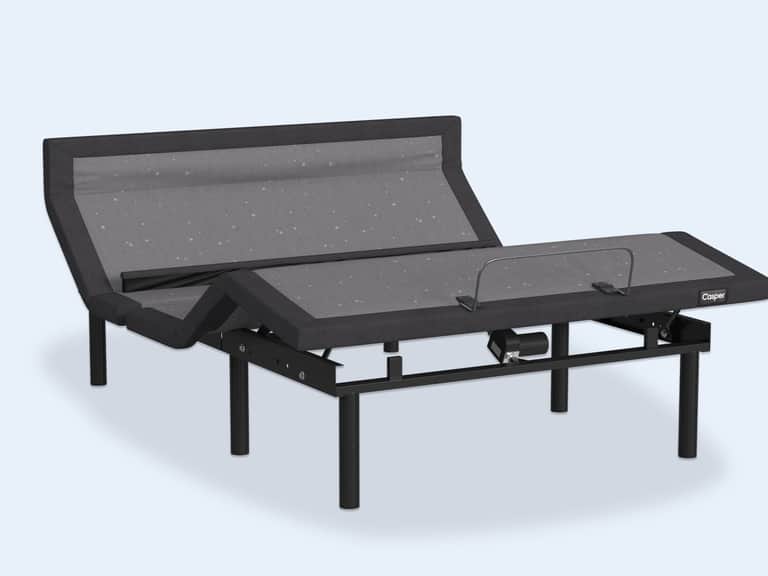
Motorized frames can offer a range of adjustments. Many raise the head, the foot, or both. Other models may include preset positions, programmable controls, under-bed lighting, charging ports, lumbar support, massage functions, or different movement settings for each side of a split base. More options do not automatically mean a better fit. The useful question is which functions you expect to use and whether they are easy to operate.
If possible, test the controls in person. Notice whether the buttons are clearly marked, whether the remote is easy to hold, and how straightforward it is to return the bed to a flat position. Ask whether the controls are wired or wireless, how the remote is powered, and what happens if it is misplaced or stops working. If more than one person uses the bed, consider whether the controls and movement options suit both users.
Noise is another practical consideration, especially in a small apartment where sound may carry between rooms or neighboring units. Ask whether the base can be operated during a demonstration and whether the manufacturer specifies anything about operating sound. A brief showroom test can offer a useful impression, but it cannot guarantee the sound level in every home. The floor, room acoustics, and proximity to other people may change how noticeable movement feels.
Some bases, including the Adjustable Base Max, are described with head and foot adjustment, Pillow Tilt, lumbar support, massage, adaptive lighting, USB ports, and a split configuration. Treat any feature list as a prompt for questions, not as proof that a base will suit your situation. Confirm the current specifications, exact size, setup requirements, compatibility, price, and applicable terms directly with the seller and manufacturer.
Delivery is part of the purchase
Delivery terms can differ significantly. Some services bring a product to the building entrance, while others deliver to a room, assemble the frame, remove packaging, or haul away an old foundation. The service name alone may not make clear what is included, so ask for a written description before placing an order.
For a building with a service elevator or scheduled delivery window, coordinate early. Ask whether you need to reserve the elevator, provide a certificate of insurance, arrange a loading-zone permit, or have someone meet the team at a specific entrance. Confirm the delivery window and find out what happens if the crew cannot complete delivery because of an access problem. Extra-trip fees, storage charges, and rescheduling rules can turn an overlooked detail into a costly one.
Ask who assembles the base and what the service covers. Does setup include attaching legs, connecting components, placing the frame in the room, and checking that it responds to the controls? Is the mattress installation included, or is it a separate service? Will the team move existing furniture or remove the old bed? These are different tasks, and the boundaries should be clear before delivery day.
Before signing for the delivery, follow the provider’s inspection process. Check that the correct number of packages arrived and look for visible damage. If the service includes setup, verify that the base can move as intended and that you know how to use the basic controls. Keep packaging and paperwork as instructed, particularly if the return policy requires original packaging.
Make a small-space plan
In apartments, the bed often shares space with desks, dressers, radiators, and narrow walking paths. A motorized frame introduces moving sections and a power connection, so the plan should account for operation as well as footprint. Before buying, consider whether the bed can lift without contacting nearby furniture and whether you can still reach doors, drawers, and windows when it is raised.
Locate the nearest suitable electrical outlet and ask how the base should be connected. Avoid assuming that an extension cord is permitted; follow the manufacturer’s instructions and ask a qualified professional if electrical or building requirements are uncertain. Keep cords arranged so they do not become trip hazards or interfere with the moving parts.
Allow for everyday use. A bed may fit on paper but leave too little room to get around it, make the closet difficult to open, or block access to an outlet. If you share a room, consider the other person’s side of the bed and the path to the door at night. The best fit is not merely a frame that can be installed. It is a setup that still works when the bed is flat, raised, and in regular use.
Read the warranty, returns, and service terms
Warranty language can be difficult to compare if the coverage periods differ for the frame, motors, electronics, and other components. Ask which parts are covered, for how long, and whether labor or in-home service is included. Find out how to request repairs, where service is available, and whether you would need to move or ship the base if something goes wrong.
Return policies deserve the same attention. Ask how long you have to initiate a return, whether the product must be in its original packaging, and who pays for pickup or return shipping. Clarify whether delivery, setup, restocking, or other fees are refundable. If a mattress and base are bought together, check whether their return periods and conditions differ.
Keep copies of receipts, model and serial numbers, warranty documents, delivery confirmations, and written compatibility answers. If an issue arises later, having the exact product information and purchase terms readily available can make the next step simpler.
Questions to ask a nearby retailer
A focused conversation can reveal whether a local option is genuinely practical. Bring your measurements and mattress details, then ask questions such as:
- What are the assembled dimensions, packaged dimensions, and total package weight?
- Can you confirm that my exact mattress model is compatible with this base?
- What is included in delivery, room placement, assembly, and packaging removal?
- What access measurements or building information do you need before confirming delivery?
- Are there added charges for stairs, long carries, elevator restrictions, or a failed delivery attempt?
- How does the control work, and what backup or replacement options are available?
- What do the warranty and return policy cover, including labor, pickup, and fees?
- Can I see the base operate, and can you explain the noise and clearance requirements?
Specific questions are more useful than asking whether a product is “good.” They invite answers that can be checked against your home, your mattress, and your priorities.
A practical checklist before ordering
Before committing to an adjustable bed, take a moment to verify the entire plan. This checklist is designed to catch common gaps while there is still time to resolve them:
- Measure the bed area, including clearance around the frame when raised.
- Measure the complete route from the building entrance to the bedroom.
- Confirm packaged size, package count, and weight with the seller.
- Check building access rules and reserve elevators or delivery windows if needed.
- Verify compatibility with the exact mattress model and size.
- Review any bedding or configuration requirements for split bases.
- Test the controls if possible and identify the functions you will actually use.
- Confirm outlet location, cord placement, and the manufacturer’s electrical guidance.
- Get delivery, assembly, removal, warranty, and return terms in writing.
- Keep purchase documents and model information somewhere easy to find.
The right frame is the one that works at home
Local shopping can be helpful, but a nearby showroom cannot measure your hallway or interpret your building’s delivery rules for you. Those details begin with the buyer. Measure carefully, check the mattress manufacturer’s guidance, and ask direct questions about delivery and service before committing.
For anyone comparing adjustable beds, the most compelling feature is not always the one that gets the most attention in a product description. A frame that reaches the room, fits the mattress, operates within the available space, and comes with clear support terms is a more meaningful match than one with a long list of functions but unanswered practical questions. In a crowded apartment or a quiet bedroom, fit is not a footnote. It is the first test.
This guide offers general purchasing information, not medical advice or a guarantee of compatibility. Always follow the specific instructions and terms provided by the base and mattress manufacturers.