Adjustable bed guide
Naturepedic Latex Pillow Loft for Elevated Sleep Positions
A pillow that feels just right when you lie flat may feel different once an adjustable bed lifts your head. Fine-tuning pillow loft can help you find a more comfortable relationship between your head, neck, and shoulders—but the aim is support, not a promised medical result.
Published November 11, 2026
Raising the head of a bed changes more than the view of the room. It changes the angle at which the head meets the pillow, how the shoulders settle into the mattress, and where pressure is felt around the neck. That shift can make a familiar pillow seem suddenly too high, too low, or simply less comfortable.
For people using an adjustable bed, this is a practical detail worth noticing. The elevation that feels comfortable for reading or resting may not be the same position you use for sleep. And a pillow that supports you well while flat may not keep the same relationship to your body when the head section rises. Adjustable fill offers one possible response: change the pillow’s loft in small increments, then assess how your body feels in the positions you actually use.
The Naturepedic Organic Adjustable Latex Pillow is described as having a zippered design that lets you adjust its fill. That makes it a relevant example for anyone exploring adjustable pillow loft. It does not make the pillow a treatment for a health condition, nor does it guarantee ideal neck alignment. Rather, it gives the sleeper a way to make measured changes to the pillow’s height and feel.
Why head elevation can change pillow support
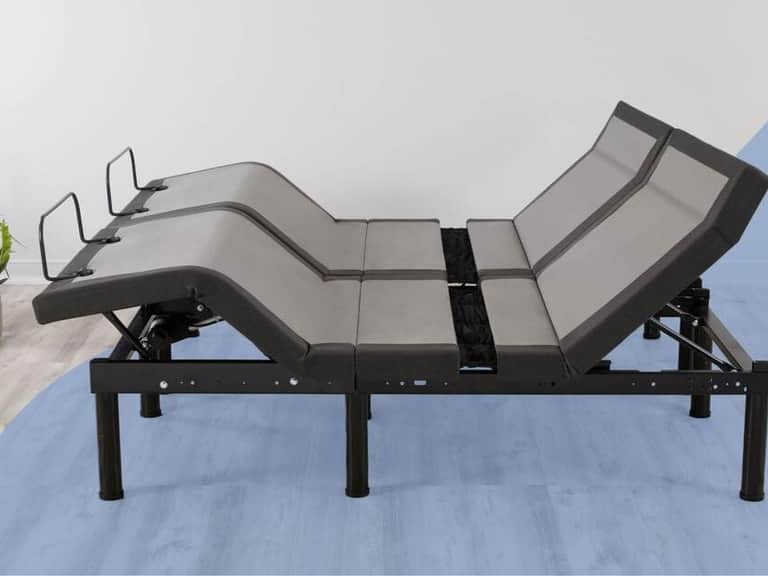
An adjustable base moves the mattress into a different position by raising or lowering sections of the bed. When the head section lifts, the body’s position changes in relation to the mattress and pillow. Depending on the angle, the upper body may be more reclined than it is when lying flat. The pillow may also shift, compress differently, or feel as though it is pushing the head forward.
There is no single pillow height that works for everyone in every position. The right feel depends on factors such as shoulder width, sleep position, mattress surface, pillow construction, and how far the bed is elevated. A side sleeper, for example, may experience pillow height differently from a back sleeper because the distance between the head and mattress differs. Someone who changes positions during the night may need to consider more than one setup.
It helps to think of head elevation and pillow loft as parts of one system. The bed base determines the angle beneath the body; the mattress provides a surface that compresses to varying degrees; and the pillow fills the space beneath the head and neck. Altering one part may change the feel of the others. This is why a pillow adjustment that seems comfortable in a flat position should be checked again at the bed’s usual incline.
Comfort is a useful signal, but it is not a precise medical measurement. A relaxed position and the absence of obvious strain can help guide personal experimentation. Persistent pain, numbness, breathing concerns, or other symptoms deserve professional attention rather than repeated changes to bedding alone.
What adjustable pillow loft means
Loft is the height or thickness of a pillow under ordinary use. It is influenced by the amount and type of fill, how the pillow is constructed, and how much the materials compress beneath the head. An adjustable-fill pillow has an opening—often a zipper—that allows some filling to be removed or added. The goal is to change its height and support gradually, rather than replacing the whole pillow whenever the fit feels off.
Latex fill is known for a responsive, springy feel, though the experience depends on the pillow’s particular construction and the sleeper’s preferences. In an adjustable design, the amount of fill can be changed to affect loft. A product description for the Naturepedic pillow notes a breathable latex fill and an accessible zipper for adjusting firmness. It also describes a washable outer cover and a spot-clean-only insert; always check the current care instructions before cleaning.
Adjustability does not mean that every pillow can be reshaped in unlimited ways. Some designs allow fill to be removed or added, while others have a fixed core or a narrower range of adjustment. Before changing anything, check the manufacturer’s directions. Keep removed fill in a clean, sealed place in case you want to restore it, and avoid overfilling the case or forcing the zipper closed.
In practice, small changes are easier to evaluate than a dramatic alteration. If the pillow feels too tall at a modest incline, removing a little fill may be a reasonable experiment. If it feels flat or fails to provide a comfortable cushion, adding some back may help. Make one change at a time, and give yourself a few minutes in your usual position to notice the result.
A careful way to check neck alignment
Alignment is often discussed as though there were one ideal posture for every sleeper. In reality, bodies and sleeping habits vary. A practical check is less about achieving a perfect-looking line and more about noticing whether the head and neck feel comfortably supported, without an obvious sense of being tipped forward, dropped backward, or pushed to one side.
Try the following process when setting up an adjustable bed pillow. It is a comfort check, not a diagnostic test.
- Begin with your usual position. Set the bed to the angle you normally use for resting or sleeping. Avoid assessing pillow height only while sitting upright or while the bed is completely flat if neither reflects your regular routine.
- Settle into the pillow naturally. Let your shoulders rest on the mattress and place your head where it would ordinarily lie. Notice whether the pillow feels supportive without requiring you to hold your head in place.
- Check for obvious discomfort. Pay attention to pressure, tension, or a sensation that your chin is being pushed toward your chest or your head is tilting backward. These observations do not identify a medical problem, but they can tell you the setup does not feel right.
- Adjust only one variable. If the pillow is adjustable, remove or add a small amount of fill according to its instructions. Keep the bed angle and sleeping position consistent while you assess the change.
- Recheck after changing positions. If you sleep on your side and back, assess both positions. A loft that feels comfortable in one may feel different in another.
- Stop if symptoms worsen. Do not continue an adjustment that causes pain, tingling, or other concerning symptoms. Return to a comfortable position and ask a qualified healthcare professional for guidance.
A brief trial can reveal an immediate mismatch, but it cannot establish how a pillow will feel through a full night. Take note of your bed angle, position, and fill changes. A short record can help distinguish a consistent improvement from a one-time impression, especially if you change several aspects of your sleep setup over a few days.
Choosing a useful starting point
There is no universal loft setting for elevated sleep positions. Instead of looking for a number that supposedly suits everyone, start with the pillow’s existing configuration and the bed position you use most often. If you have not adjusted the fill before, preserve the original amount as a reference. Change it in small steps, and note how each setting feels.
Sleep position matters. Side sleepers often prefer enough loft to fill the space between the head and shoulder, while back sleepers may prefer a different balance. Stomach sleepers may find that a higher pillow feels uncomfortable, though individual preferences and body mechanics differ. These are general considerations, not rules. A raised bed can further change the experience, so judge the result in the position that matters to you.
Also consider what the pillow is resting on. A mattress that compresses noticeably beneath the shoulders can affect the space the pillow needs to fill. A latex mattress, for instance, may have a different feel from a softer surface, but mattress material alone does not determine the right pillow loft. The combination of the mattress, your body, and the bed’s angle is what you experience.
If two people share an adjustable bed, each may have different preferences or needs. Split configurations can allow separate positioning on some bases, but a shared pillow may still be a poor fit for both sleepers. When possible, assess each person’s pillow individually rather than assuming one loft will work equally well across different sleep positions and body shapes.
What to look for in an adjustable latex pillow
Product descriptions can help explain construction, but they cannot predict exactly how a pillow will feel for you. When reviewing an adjustable latex pillow, look for clear information about the fill, the adjustment method, care, dimensions, and warranty. It is useful to know whether the insert itself can be washed, whether only the cover is washable, and whether the fill is intended to be removed in small amounts.
- Adjustment access: Check that the opening is easy to use and that the instructions explain how to adjust the fill safely.
- Material details: Note the stated type of latex and the materials used in the cover. Certifications should be interpreted according to what they cover, rather than as broad claims about every aspect of a product.
- Care requirements: Confirm which components can be washed and which should only be spot cleaned. A washable cover does not necessarily mean the fill is washable.
- Dimensions and fit: Check pillow size against your pillowcase, mattress width, and preferred sleeping arrangement.
- Return and warranty terms: Read the current policies before purchase, particularly if you are unsure whether the feel will suit an elevated position.
The listed Naturepedic pillow is presented as an adjustable latex option with a zippered fill, organic cotton cover, and multiple standard sizes. Its product information describes a removable, washable cover and a spot-clean-only insert. These details may be useful when comparing options, but material claims and care instructions should be verified on the current product page before making a decision.
Common mistakes to avoid
One frequent mistake is changing the bed angle and pillow loft at the same time. If the result feels better or worse, it becomes difficult to know which change mattered. Adjust one element, then reassess before making another change. The same principle applies to changing the pillow, mattress, and sleeping position all at once.
Another is assuming that a higher head position always requires a taller pillow. Elevation alters the body’s angle, but the effect varies with the bed’s movement, the sleeper’s position, and the materials involved. Raising the pillow automatically may create a feeling of excessive height or forward pressure. Let comfort in your actual position guide the experiment.
It is also easy to treat a short test as a final verdict. A few minutes can reveal obvious discomfort; it cannot show how a setup will feel after hours or whether it will remain comfortable as you change position. Consider a gradual trial, but stop if discomfort increases. Do not tolerate worsening symptoms in the hope that the pillow will eventually correct them.
Finally, avoid treating an adjustable pillow as a substitute for medical advice. Head elevation and pillow changes are sometimes discussed in connection with health concerns, but an accessory is not a diagnosis or treatment plan. If you are using elevation for a medical reason, ask your clinician what positions are appropriate for you and whether your planned setup is compatible with any care instructions.
When to ask a healthcare professional
A pillow adjustment is a modest change to a sleep setup, not a solution for every problem that occurs in bed. If you have persistent neck or back pain, recurring headaches, numbness, weakness, breathing difficulties, or symptoms that interfere with daily life, seek advice from an appropriate healthcare professional. Do not rely on a particular loft or incline to manage a condition without guidance.
This is especially important for people recovering from an injury or surgery, those with mobility limitations, and anyone whose clinician has recommended specific positioning. An adjustable base can change the way a person moves into and out of bed. Caregivers should follow the person’s clinical instructions and use the bed according to its safety guidance, rather than making assumptions based on comfort alone.
For general questions about neck support, a clinician or physical therapist may help identify whether a pillow, sleeping position, or another factor should be considered. Share what you have already tried, including the bed angle and any changes to the pillow’s fill. Specific observations are more useful than a broad statement that a pillow “feels wrong.”
The practical takeaway
Elevating the head can change how the head and neck meet the pillow. A height that feels comfortable on a flat mattress may not feel the same when an adjustable base is raised. An adjustable-fill latex pillow offers a way to test small changes in loft, but the right setting depends on the individual, the angle, the sleeping position, and the rest of the bed.
Begin with your usual setup. Make one small adjustment at a time. Recheck support in the positions you actually use, and pay attention to comfort without treating it as a medical measurement. If symptoms persist or you are elevating the bed for a health concern, seek professional guidance. The most useful pillow adjustment is not the one with the most impressive claim; it is the one that can be assessed carefully, comfortably, and safely in the context of your own sleep routine.